

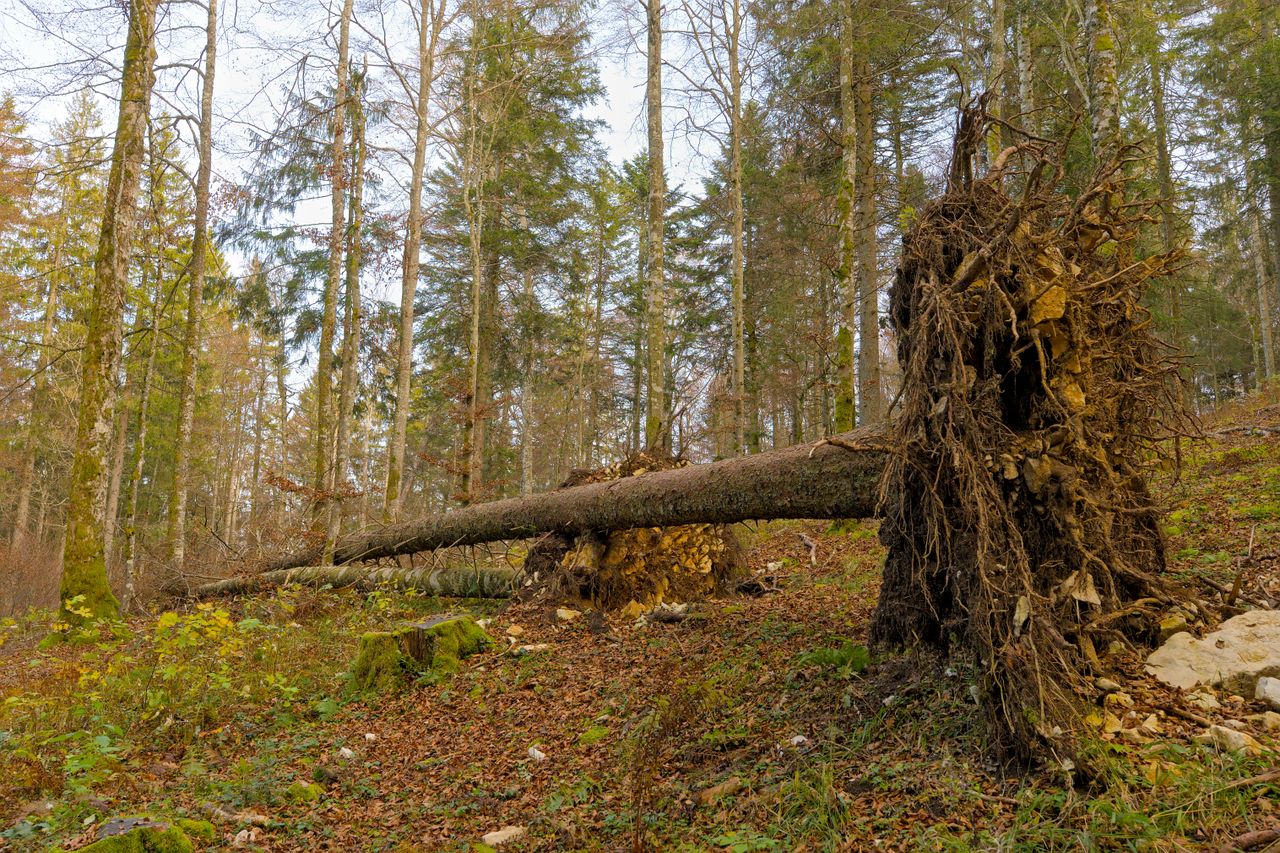
When a tree topples, typically no one is harmed, but a toppling leader brings damage to everyone surrounding the leader: a family, a company, a congregation. Trust is broken. Dreams and goals seem to be ruined. People are disoriented, struggling to reconcile the beauty that occurred under the leader’s direction with the ugly truth of what has been revealed. When a tree falls, the clean-up is done within a few days, new grass grows pretty quickly, and a new tree is often planted. When a leader falls, the clean-up lasts for years, sometimes decades. There is a lot of damage, and the debris can’t simply be put in the back of a pick-up truck and driven away.
With trees, toppling most often occurs when storms meet unhealthy roots. Storms + unhealthy roots = disaster. The same is true with leaders.
Whether leading in the home, in the marketplace, or in local church ministry, there are always storms in leadership. The apostle Paul knew about storms. He cataloged his suffering in a way that sounds almost absurd: beatings, imprisonment, shipwrecked not once, not twice, but three times. Stoned. Left for dead and in danger from rivers, from robbers, and from his own countrymen. But then he ends the list with something unexpected. After everything he faced from physical torture to near-death experiences to relentless persecution—he names what pressed on him most: “the daily pressure” he carried for the people he was serving (2 Corinthians 11:28). He was declaring that the internal burden of caring for God’s people was heavier than the beatings. Heavier than the stoning. Heavier than being shipwrecked and left in the open sea.
There is no such thing as leadership without storms, so we must concern ourselves with the health of our roots. Two trees in the same field can respond very differently to a storm. The one with healthy roots endures; the one with unhealthy roots doesn’t. Before the storm, they might look identical. But the storm reveals what was already true about the roots.
If a leader’s competence is greater than their character, toppling is almost certain. “Fake it till you make it” may sometimes work with competence, but the cliché never works with character. When the apostle Paul instructed his protégé Timothy to invest in other leaders, he told him to find the faithful who will be able, not to find the able who will maybe one day be trustworthy. Paul believed that faithfulness (character) was most important and that leaders could grow in ability (competence). The order must not be confused (2 Timothy 2:2).
If a leader’s platform grows while their heart grows cold, devastation is looming. Leaders can lead a growing organization while their hearts grow cold. A leader with a cold heart will make stupid choices, since sin always makes us stupid. Success, however it has been defined, puts more eyes on the impending toppling, a toppling some would love to watch.
The prevalence of toppling and the burden of leadership is why the inner life, the roots beneath the surface, in the life of a leader matters so much. As leaders, we must be aware of the weight of the burden so we will, with great intentionality, ensure the roots beneath the surface are healthy.
You can read more about the healthy roots beneath the surface in a leader’s life in my new book The Rooted Leader.